


The question deserves a straight answer rather than either the marketing version or the dismissive one. Does a stress ball work depends entirely on what you were expecting it to do — and most disappointment comes from buying one expecting an outcome it was never going to deliver, while the things it genuinely does go unnoticed because nobody advertises them.
We sell these, so treat the following as a description of what the object does rather than a claim about what it will do for you. We are not making health claims and cannot make them.
What Squeezing One Actually Does
It occupies your hands. This is the whole mechanical function, and it is not trivial. Hands that have nothing to do find something to do — a pen, a phone, a cuticle, a keyboard. Giving them a defined object redirects that, and redirection is a far more achievable goal than suppression.
It gives your hand resistance to work against. Closing your hand against something that pushes back is a small physical action with a clear beginning and end, which is a different experience from making a fist against nothing.
It provides a repeatable, predictable sensation. Predictability is most of why people describe a squeeze toy as calming: you know exactly what will happen, which is uncommon in a working day.
It creates a pause. Picking something up and squeezing it takes a few seconds, and those seconds happen between whatever you were doing and whatever you do next.
None of those is a medical effect. All of them are real, observable, and enough for most people who keep one on a desk.
Does a Stress Ball Work as a Habit Substitute
This is where it does the most, and it is the use case people stumble into rather than choose.
Hand habits are substitutions rather than things you stop. Anyone who has tried to simply stop tapping, clicking or picking at something knows that the urge does not disappear when the target does — it relocates. A squeeze toy is a target you have chosen, and choosing the target is the only part of a hand habit that is reliably under your control.
That is also why the object matters less than its availability. A ball in a drawer substitutes for nothing. The placement reasoning is in what survives a shared office, and it applies here directly: a fidget you have to fetch is not competing with the habit it was supposed to replace.
What It Does Not Do
It does not treat anything. Any listing that implies otherwise is overreaching, including ours if it ever did.
It does not build significant grip strength on its own. Ordinary soft stress balls are too soft to load a hand meaningfully; that requires deliberately firm resistance and structured use, which is a different exercise and covered separately in stress ball grip work.
It does not work if it is out of reach, out of sight, or the wrong firmness for your hand. Those three account for most of the “I bought one and never used it” stories, and the firmness question alone is worth getting right first — see best stress ball by resistance.
Why Some People Get Nothing From One
Because compression is only one of several hand actions, and it is not everyone’s.
Someone whose hands want to click, spin or track a texture will find a squeeze toy pleasant for a day and boring by the end of the week — not because it failed, but because it does the wrong thing. That is the argument behind sorting the category by action rather than by shape in types of fidget toys.
The test is cheap: squeeze something soft near you right now and ask whether you would happily do that a hundred times. If the answer is no, the answer is no, and no product in this category will change it.
Getting More Out of One If You Do Like It
Keep it where your non-dominant hand rests, not where your mouse is.
Match the firmness to what your hand actually wants rather than buying the softest option by default.
Accept that it is a background object. The times it helps most are the times you will not remember using it.
Replace it when it hardens or splits rather than persisting with one that no longer does what it did, since ageing changes the resistance considerably — the processes are set out in yellow, sticky or hard.
Why the Question Gets Asked at All
Two reasons, and separating them helps.
Some people are checking whether the category is a gimmick before spending anything. The fair answer is that the object does something small and real, that the something is mechanical rather than medical, and that whether it is worth it depends on whether occupying your hands is a problem you actually have.
Others already own one that is not working and want to know whether to persist. For them the diagnosis is usually one of three things: wrong action, wrong firmness, or wrong location. All three are fixable, and none of them is a reason to conclude the category does nothing.
The version of this question that has no useful answer is whether it works better than some alternative. Hands differ enough that comparisons like that do not transfer between people.
Three Worth Trying
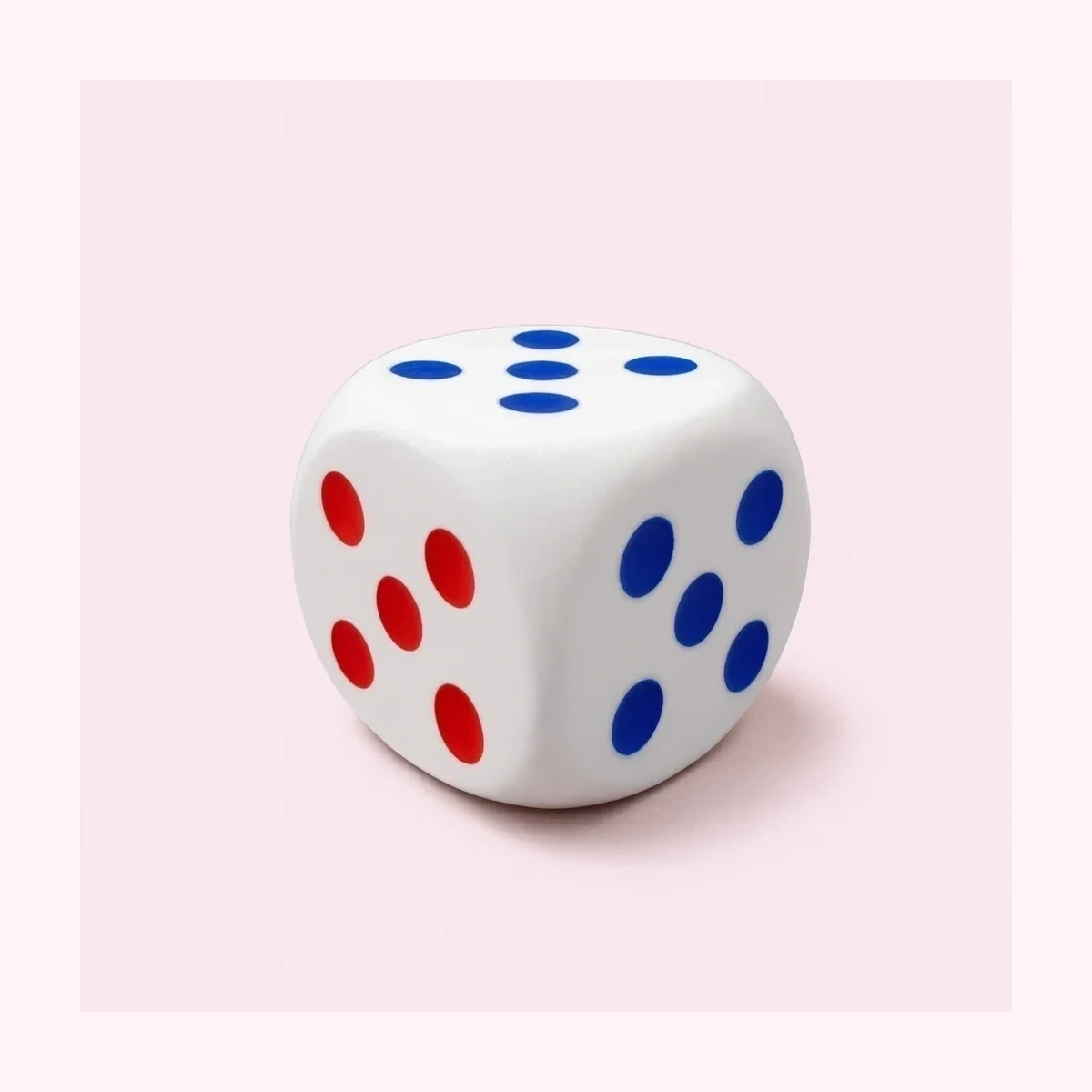
3-inch Foam Dice Stress Ball — solid moulded foam, medium resistance, silent, effectively unbreakable by hand.
Fluid-Filled Watermelon Squishy — a 6 cm gel body with a slow return, for people who want the sensation rather than the effort.
Silicone Sensory Stones — the alternative if it turns out your hands want texture rather than compression.
Browse the fidget balls range, or see all fidget toys to compare compression against the other seven hand actions.