





Searching for the best fidget cube returns four products that behave nothing alike, which is why the reviews contradict each other so cheerfully. A folding cube, a six-sided multi-function cube, a magnetic panel cube and a squishy cube share a silhouette and share almost nothing else, so the first decision is not which one is good — it is which of the four you are actually shopping for.
The Four Cubes
Folding cubes. Eight blocks on a hinge chain that folds through itself endlessly. Continuous motion, no end state, deep and absorbing. The Infinity Folding Cube is this, and what it is and is not is set out in what is an infinity cube.
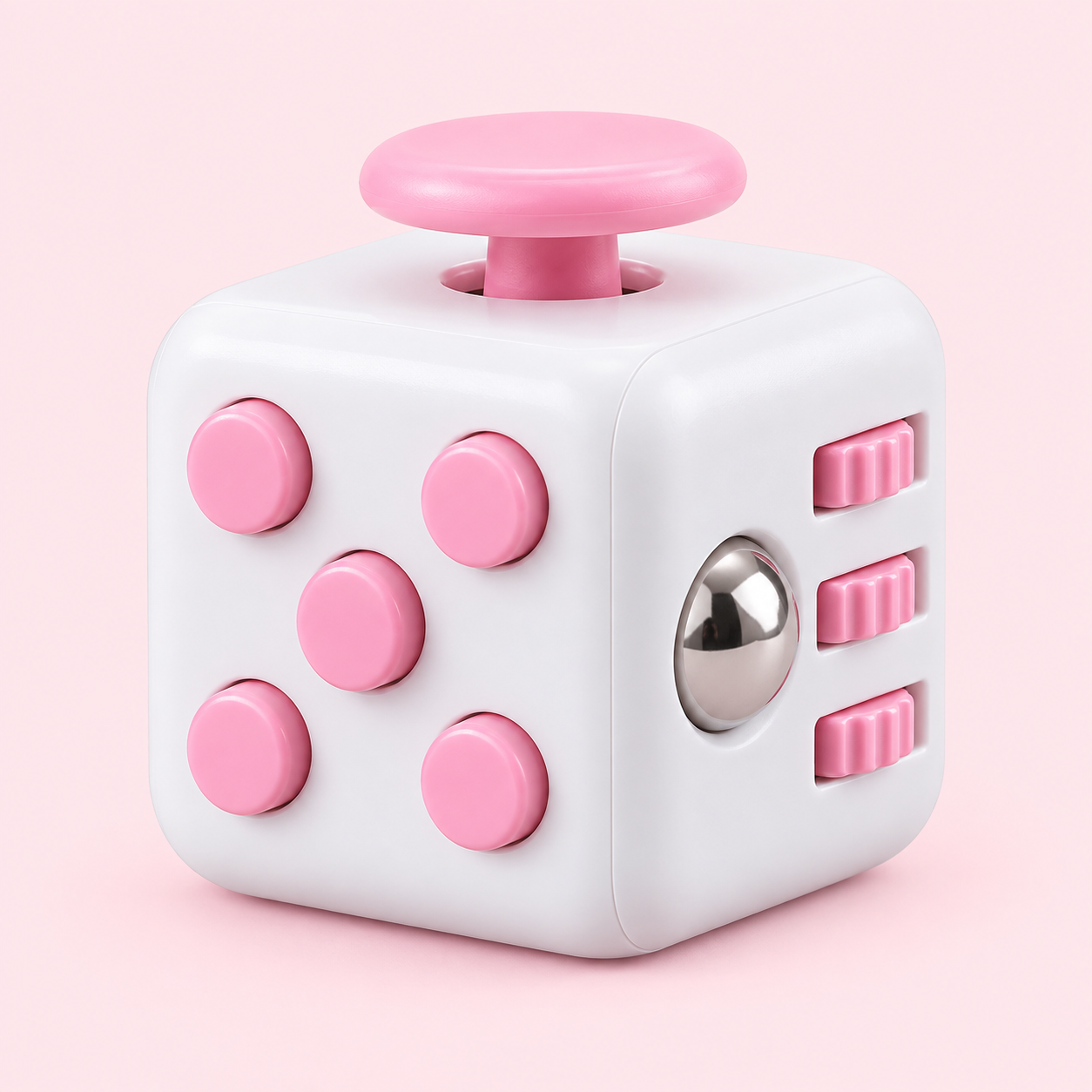
Multi-function cubes. Six faces, six small mechanisms — a switch, buttons, a dial, a rocker. Variety in one object. The White & Pink Six-Sided Fidget Cube is the type.
Magnetic panel cubes. Faces held closed by magnets that release and re-seat, giving a latch-and-release action instead of a fold. The Magnetic Fidget Box has visible panels and sliding parts.
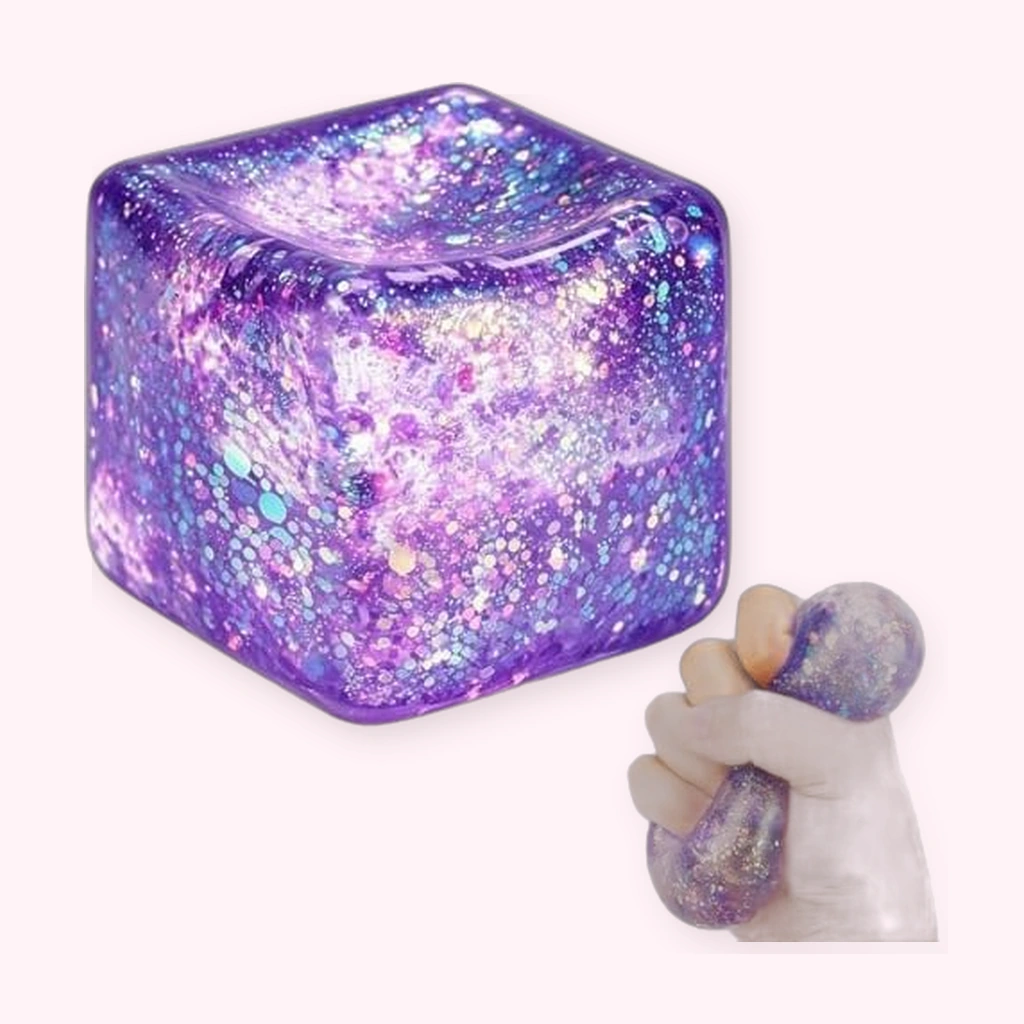
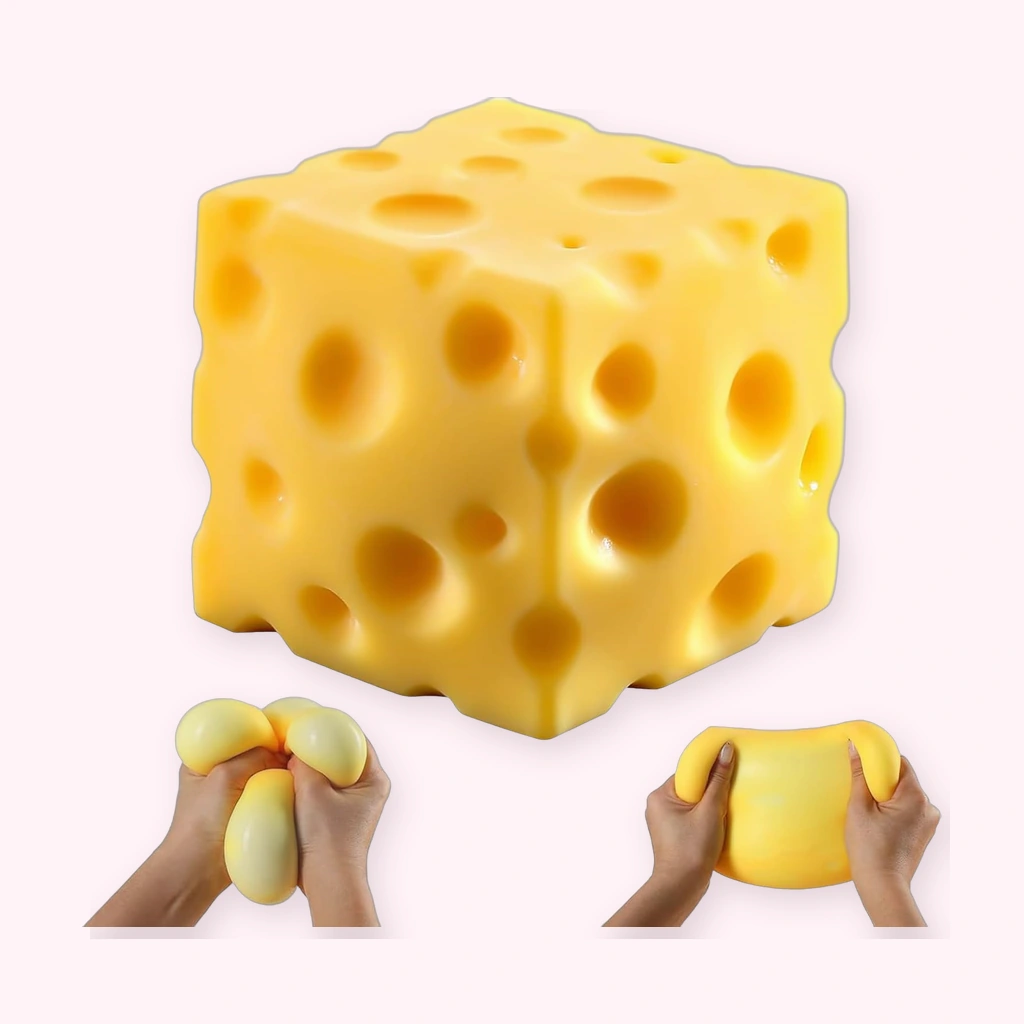
Squishy cubes. Not a mechanism at all — a compression toy in cube form.
Why Six Mechanisms Is Not the Upgrade It Looks Like
A multi-function cube looks like the obvious best buy: more things to do, same money. In practice it has a specific weakness.
Choosing a face is a visual task. You have to look, or feel around, to find the mechanism you want — and a fidget exists precisely so that your attention can stay somewhere else. Objects with one deep mechanism get picked up and used; objects with six shallow ones get picked up and inspected.
The second issue is that six mechanisms in one body means each one is small. The switch is a small switch, the dial is a small dial, and none of them is as satisfying as a dedicated object doing the same thing.
Where multi-function cubes genuinely win is when you do not yet know which action you prefer. As a way of discovering whether you like clicking, rolling or sliding, one cube answers several questions at once — and then you buy the dedicated object for whichever face you kept using. That is the same discovery logic as a mixed multi-pack in bulk fidget toys.
Choosing the Best Fidget Cube for How You Fidget
Continuous motion, two hands, deep engagement: a folding cube. Loud, so not for shared rooms.
A definite click and a defined stop: a magnetic panel cube. Quieter than folding because the magnet controls the arrival.
Variety, or uncertainty about your own preference: a multi-function cube.
Compression: a squishy cube, which belongs in the fidget balls conversation rather than this one.
The underlying question is which hand action you want, which is the frame used in types of fidget toys — folding, pressing and sliding are three different appetites and a cube can serve any of them.
What to Check Before Buying
On a folding cube, the hinge consistency. All twelve hinges should feel the same. One stiff or floppy joint spoils the whole motion, and it is usually there from the start rather than developing.
On a multi-function cube, the switch quality. The tactile bump is what makes a press satisfying, and cheap switches are linear and dead. That single property decides whether you use three of the six faces or none — the variables are broken down in keyboard fidget toy switches.
On a magnetic cube, the magnet strength. Too strong and the panels need two hands to open, which removes the point.
On any of them, whether the body is hollow. A hollow shell amplifies everything, which is what makes a cube loud in a shared room.
Size and Material
Larger cubes are easier to learn on and harder to carry. Smaller ones fit a pocket and are fiddlier to operate, which for folding cubes in particular is a real constraint — the general limits are in small fidget toys.
Metal bodies fold with momentum you guide; plastic ones fold with control you drive. That comparison, including how each material’s hinges fail, is in metal infinity cube vs plastic.
The Noise Question, Which Decides Where It Can Live
Cubes are among the louder fidget shapes, and the reason is structural rather than a flaw in any particular design.
Every cube mechanism ends with two rigid surfaces meeting: a fold lands block against block, a panel snaps shut, a switch bottoms out. That is a percussive event by construction, and a hollow body amplifies it.
Magnetic panel cubes are the quietest of the three mechanisms, because the magnet decelerates the panel before it arrives rather than letting it collide. Folding cubes are the loudest, particularly in metal. Multi-function cubes depend entirely on which face you are using.
If a cube has to work in a shared room, tap the body before buying: a ring or a hollow knock means it will be louder in use than the mechanism alone suggests. The wider mechanism-by-mechanism sort is in the quietest fidget toys that aren’t squishies.
Three Cubes, Three Actions
Infinity Folding Cube — linked segments, continuous fold in both directions. The deepest single mechanism here.
Magnetic Fidget Box — magnetic panels and slides, a latch action with a controlled stop.
White & Pink Six-Sided Fidget Cube — several mechanisms on one body, best used to find out which one you like.
If you want the mechanism detail behind these choices, what is inside a fidget cube goes face by face through the six functions and where each one fails.
Browse the fidget cubes range, or all fidget toys to compare a cube against a slider, a ring or a spinner.
And if you are working through reviews before deciding, what cube reviews never tell you explains which parts of them to discount.