


Your aim usually drops before your skill does — gamer hand fatigue builds as forearms tighten and fingers hold the same claw shape for hours. The fix isn’t heroic: uncurl between matches, run two quick stretches, and give your hands something soft to squeeze that isn’t your mouse. A squishy parked next to the keyboard makes that reset automatic.
Think of it as the hand version of standing up during queue. Free, fast, and the version of you in game five will notice the difference.
Gamer Hand Fatigue: What’s Actually Going On
Gaming hands do two contradictory things at once: they hold a static grip for hours while firing off thousands of tiny, precise inputs. The gripping muscles stay half-clenched the whole session, the tapping muscles never rest, and nothing about that arrangement includes recovery. The result is that familiar end-of-session state — stiff fingers, tight forearms, and a wrist that files a complaint when you finally let go of the mouse. None of this is exclusive to ranked grinders, either — the same claw shows up after a marathon strategy session or a long modded-build night. Hours are hours, as far as a forearm is concerned.
The between-match window is the free fix nobody uses, because scrolling feels more urgent than uncurling. And the obligatory line, meant sincerely: this isn’t medical advice — persistent pain, tingling, or numbness is a see-a-professional situation, not a push-through-it situation.
The 90-Second Between-Match Reset
Queue pops in ninety seconds anyway. Use them:
| Move | Time | How |
|---|---|---|
| Shake-out | 10 sec | Drop both hands, shake loose like you’re air-drying them |
| Wrist flexor stretch | 15 sec per side | Arm out, palm up, gently draw fingers back — easy, never to pain |
| Wrist extensor stretch | 15 sec per side | Same idea, palm down, gentle pull |
| Finger spreads | 10 reps | Splay wide, hold a beat, relax |
| Slow squishy squeezes | 10 reps | Full squeeze, then release as slowly as the foam rises |
None of this requires standing up, which we acknowledge is the entire reason it might actually happen. Two honest notes: stretch gently — the goal is release, never strain — and skip anything that hurts. This is maintenance, and maintenance is boring on purpose. The habit-stacking logic is the same one we cover in desk fidget habits that beat the afternoon slump: tie the reset to something that already happens — loading screens — and it runs itself.
Why Squeezing Beats Death-Gripping Your Mouse
A squishy earns its desk slot because it makes your hand do the opposite of gaming. Instead of a frozen half-grip, you get a full close and a full open. Slow-rising foam is the ideal coach here: it compresses flat, then pushes back against your palm on its own lazy schedule, and matching your release to that slow rise forces the one thing a ranked lobby never does — pacing. Pair each squeeze with an exhale and you’ve smuggled a breathing exercise into your setup.
Density matters for feel here. A slow-rise butter style gives that deep, pillowy press for full-hand resets; a firmer wedge gives fingertips something to work against. Neither is wrong — rotate them the way you’d rotate grips.
It’s also stream-proof. Foam is silent — no clicks, no rattles, nothing for a hot mic to pick up between rounds. And if you’re wondering whether hand-busy objects wreck focus or feed it, we dug into that in do fidget squishies help focus and productivity; short version, a repetitive squeeze tends to occupy the restless channel, not the thinking one.
Desk Picks (the Cheese Pun Is Intentional)
Placement rule first: the squishy lives between keyboard and monitor, reachable by the mouse hand without looking. If it’s in a drawer, it’s decor.
- Cheese Mouse Cup Squishy — a mouse for your mouse hand. Squeeze the cup and the little mouse pops up, which is the exact energy of peeking a corner. The novelty earns the desk slot; the squeeze keeps it.
- Pizza Cheese Squishy wedge — a slow-rising triangle with a satisfying dense press, sized for one-handed squeezes while your other hand scrolls the scoreboard.
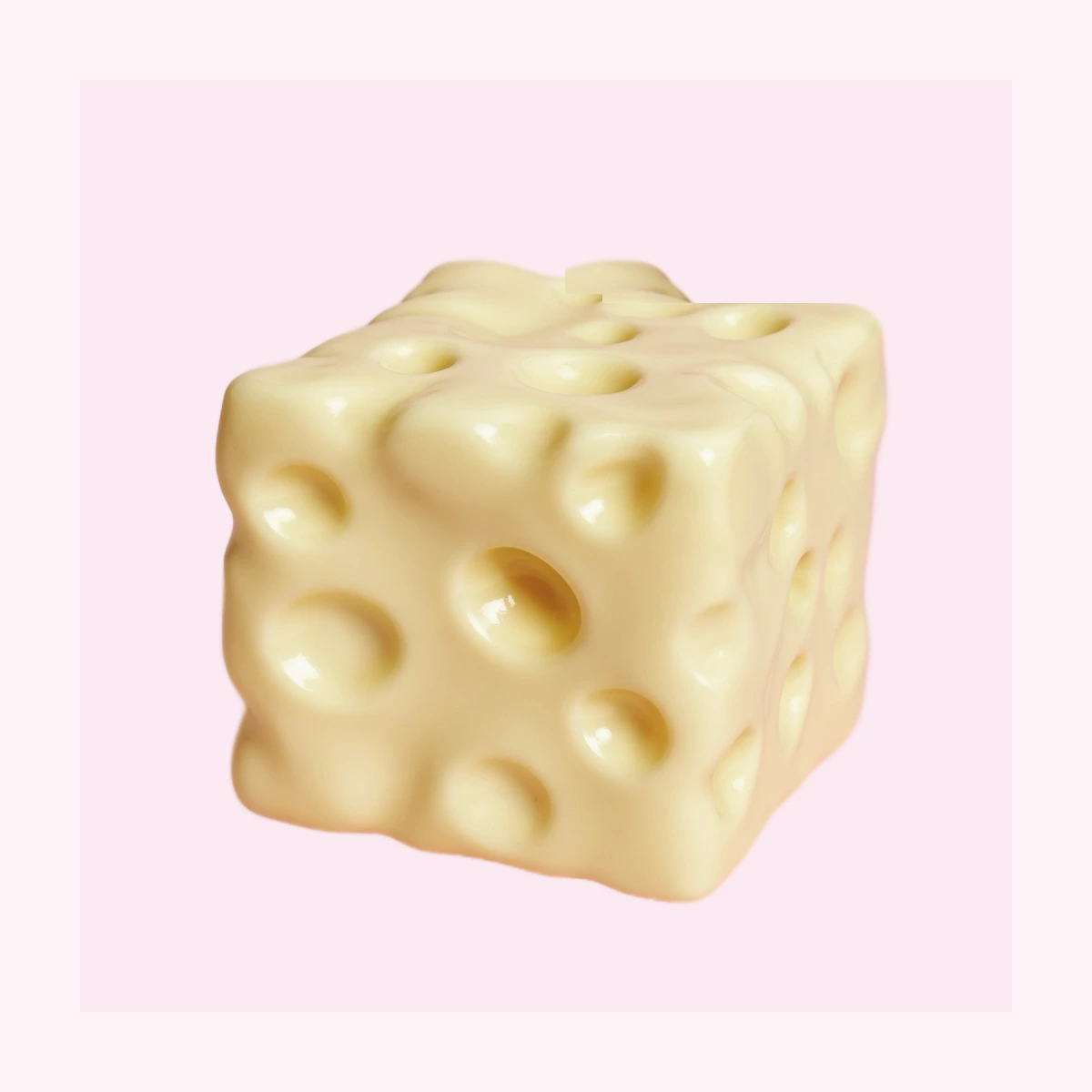
- Cheese Squishy Block — the holey yellow block. Thumbs find the holes on their own, and the chunky shape suits big full-fist squeezes after a long clutch.
If cheese isn’t your aesthetic, the butter squishy collection is the classic slow-rise desk option, and the full cheese squishy collection exists for those committed to the bit.
FAQ
Will a squishy fix my wrist pain? No — it’s a comfort-and-habit tool, not a treatment. It helps you break up static grip time, but pain that shows up every session or lingers afterward deserves an actual professional’s eyes.
Squishy or grip strengthener? Opposite tools. A strengthener adds load and trains; a squishy removes tension and relaxes — and mid-session, when your hands are already worked, the soft option is the one that helps rather than piles on.
Is it stream-safe? Completely. Slow-rising foam makes zero noise on mic, unlike clicky fidgets, pen spinning, or the keyboard-adjacent snacks your chat can apparently always hear. If anything, a slow-rising squishy re-inflating on camera makes decent b-roll.
How often should I actually do the reset? A reasonable rhythm is once between every match or roughly every half hour to hour, plus a real stand-up-and-shake break every couple of hours. Consistency beats intensity here — ten lazy squeezes every game outperforms one heroic stretch session at 2 a.m.